Websites
Shopify 2.0 Redesign Agency
- 8 min read
A Shopify 2.0 redesign gives you more control over your store's layout, content and functionality. But a new theme alone won't make your offer clearer, answer customers' questions or give them a stronger reason to buy.
That's where we come in. We research your market, sharpen your offer, write the copy and build the pages that lead visitors to your existing Shopify catalogue and checkout. Your products, inventory and payments stay in Shopify. We focus on giving customers a reason to reach them.
What a Shopify 2.0 redesign changes
Online Store 2.0 changed how Shopify themes are built and managed. It gives store owners more control over their layout, functionality and content, without relying on a developer for every update. Three improvements matter most.
Sections beyond the homepage. You can add, remove and rearrange sections across product, collection and other supported pages using Shopify's theme editor. This makes it easier to customise the shopping experience without rebuilding entire pages.
Apps as blocks. Compatible apps can be added and managed directly in the theme editor without modifying the underlying theme code. This makes integrations easier to maintain, update and remove.
Content your team can update. Metafields let you manage product specifications, sizing information, images and other content separately from the page layout. Your team can update these details without asking a developer to edit each page.
These improvements make your store more flexible and easier to manage. But they don't determine how you position your products, communicate their value or address the questions customers have before buying. Those decisions require a different kind of work.
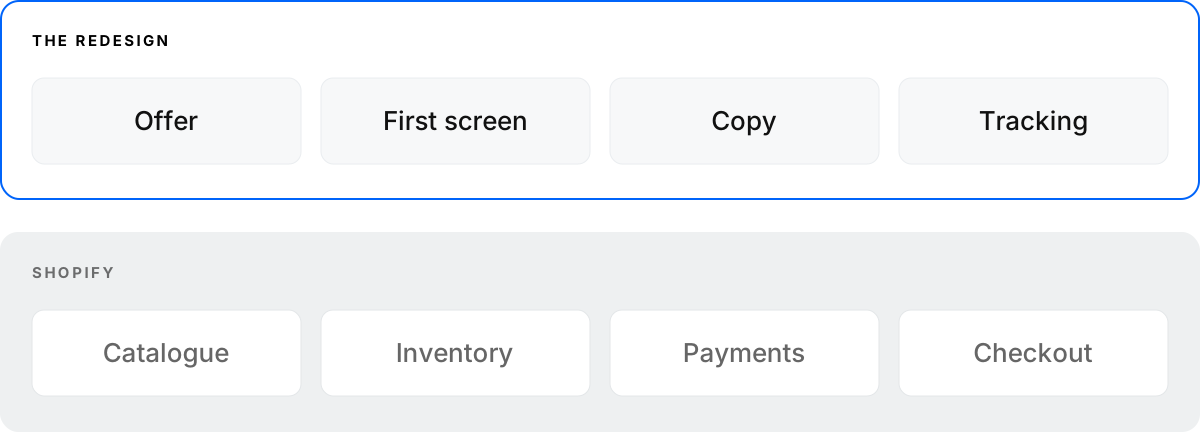
The theme is not what sells
| What a 2.0 redesign changes | What decides whether someone buys |
|---|---|
| Sections can be rearranged on every page type | A first screen that clearly explains what you sell and why it matters |
| Apps can be added as blocks in the theme editor | An offer that gives customers a reason to choose you |
| Product information becomes easier to manage through metafields | Copy that answers questions and removes doubts before purchase |
| A more flexible editor for managing page layouts | Tracking that shows which pages lead to purchases and where visitors drop off |
A better theme can make your store easier to navigate, update and shop from. But it cannot make an unclear offer compelling. You can rearrange every section on a product page and still leave customers wondering why they should buy this product, from your store, at this price.
That's where our work begins. Before designing a page, we identify what your customers need to understand, what might stop them from buying and how your offer compares to the alternatives. Those answers shape the copy, structure and design, giving the redesign a purpose beyond a new appearance.
What we redesign
Four parts, in this order, because each one builds on the decisions made before it.
The offer and how it is positioned
We research your market, study competing stores and look at how your customers describe what they need. From there, we clarify what makes your products worth choosing, who you're selling to and why someone should buy from you instead of a competitor. That becomes the foundation for every page we build.
The first screen
Before visitors explore your products, they need to know they've come to the right place. We write and design the first screen to communicate what you're offering, why it matters and what to do next. The rest of the page builds on that message rather than competing with it.
The page copy
Customers need answers before they commit to a purchase. We identify the questions, concerns and objections each page needs to address, then write the copy and organise the supporting evidence around them. Every section has a purpose, whether that's explaining a benefit, building trust or helping someone take the next step.
Tracking that tells you the truth
A redesign should be measured by more than how it looks. We set up GA4, Google Tag Manager, Meta Pixel and key conversion events on the pages we build, so you can see where visitors come from, how they interact with your content and when they move toward checkout. Purchase tracking within Shopify depends on your existing setup and agreed integrations.
The same product, two first screens
The two examples below present the same hypothetical product in different ways. One leads with the product name and features. The other explains who the product is for, why it matters and what makes the offer worth considering.
The product hasn't changed. Only the way it's presented has. These are illustrations, not client projects or measured conversion results.
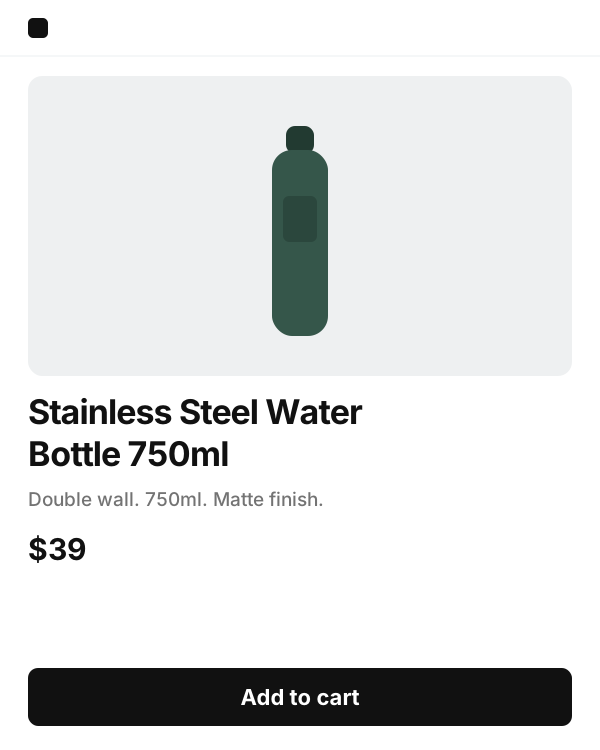
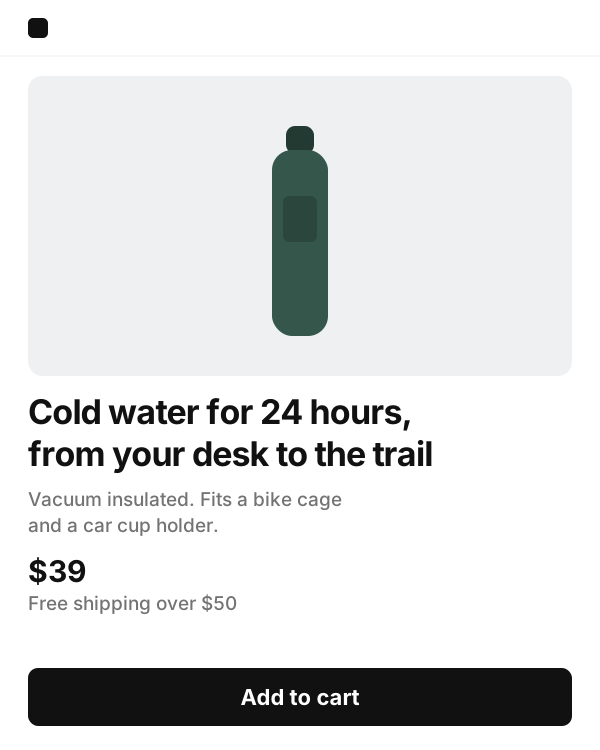
A theme can make buying easier. Your offer and messaging give customers a reason to buy from you.
What we take on, and what we leave to someone else
Not every Shopify store needs a new theme. If your existing catalogue and checkout work well, the bigger opportunity may be in how you present your products, communicate their value and guide customers toward a purchase.
| What we handle | What we don’t |
|---|---|
| Market research, offer and positioning | Shopify theme and Liquid development |
| Page structure, messaging and copywriting | Custom Shopify app development |
| Design and development of marketing pages | Theme migration as a standalone job |
| Analytics and conversion tracking | Catalogue work at Shopify Plus scale |
| Testing, launch and complete handover | Inventory, fulfilment and checkout setup |
If your store needs a technical theme upgrade, custom functionality or a Shopify migration, a specialist developer is the right choice. But if visitors are reaching your store without understanding why they should buy from you, changing the theme alone may not solve the problem.
We focus on that second challenge. Shopify continues to manage your products, inventory, payments and checkout. We build the marketing pages that communicate your offer and guide visitors into your existing purchasing process, without unnecessarily replacing the systems you already rely on.
Four checks before you pay for any redesign
- Ask what the redesign is supposed to improve. “Modernise the store” is vague. “Increase the add-to-cart rate” gives you something to measure.
- Ask who writes the copy. Find out whether research, positioning and copywriting are included or left to you.
- Ask how your Google rankings will be protected. Changes to URLs and page structure can cost you organic traffic.
- Get the price and scope in writing. Know what is included, what is not and what counts as extra work.
These four questions apply to any agency, including us.
How the project runs
1. Call and written proposal
We discuss what your store sells, what isn't working and what you want to improve. You receive a written scope, timeline and fixed price before committing.
2. Intake, research and offer
Once the 50% deposit is paid and we have your assets and access, we research your market, competitors and customers. We use those findings to define the offer and positioning for every page.
3. The content and strategy approval
You review the page structure and copy before design begins. This is the first of two revision rounds, when changes are easiest to make.
4. The visual direction approval
We present one recommended design direction for approval. Once agreed, we apply it consistently across the pages.
5. Build, launch and handover
We build and test the pages, connect them to your existing Shopify purchasing process and launch. You receive the source files, account ownership and handover documentation. The remaining 50% is due on delivery. A standard project takes up to around a month from the first call.
Selected work
Neither project was built on Shopify. Both show how improving the pages around a product or service can lead to better business results.
Grand Car Sale

A vehicle importer in Cyprus had a slow WordPress website with hundreds of manually updated listings, costing roughly €36,000 a year. We rebuilt the catalogue, added financing calculators and lead-generation funnels, and connected everything to their CRM. The new site loads 3.5 times faster, eliminates manual catalogue updates, preserves existing Google rankings and helped reduce customer acquisition costs by 32%.
Read the Grand Car Sale case study
Voice Karaoke

A hospitality venue in Limassol had a Wix website structured like an online store, making table bookings unnecessarily difficult. We rebuilt it around rooms, events and reservations, with booking requests sent directly to staff via Telegram. The first bookings arrived two days after launch.
Read the Voice Karaoke case study
Why work with us
One fixed price, agreed in writing
We quote the project, not the hours. You know the scope, deliverables, timeline and total cost before work begins. The agreed price stays fixed, and anything outside the scope is quoted separately.
One team for the whole project
Research, positioning, copywriting, design, development and tracking are handled by the same team. You don't have to coordinate multiple providers or make sure one person's work fits another's.
You own everything
The source files, domains and accounts we set up for your website belong to you. If we host it and you decide to move, we'll handle the transfer at no cost. No lock-in.
You can see the thinking before you buy
Start with a free Website Audit. We'll review your existing pages, identify what could be improved and show you how we'd approach the redesign. No obligation to hire us.
Questions we get asked
What is a Shopify 2.0 redesign?
A Shopify 2.0 redesign updates your store using Shopify's newer theme architecture, with flexible page sections, app blocks and editable content fields. While theme developers handle the technical rebuild, we focus on the offer, messaging and marketing pages that bring customers to your store.
Will moving to a 2.0 theme increase my sales?
Not automatically. A new theme can improve navigation, usability and the shopping experience, but it won't fix an unclear offer or weak messaging. Both the shopping experience and what your pages communicate influence conversions.
Do you build Shopify themes or apps?
No. We don't develop Liquid themes, custom Shopify apps or handle theme migrations. We research, write, design and build marketing pages that connect to your existing Shopify store.
Can you redesign the pages without touching my catalogue or checkout?
Yes. Shopify continues to manage your products, inventory, payments and checkout. We build the marketing pages that present your offer and direct visitors into your existing Shopify purchasing process.
How much does a redesign cost?
It depends on how many pages the project covers, how much research the offer needs and what functionality and integrations are involved. We price projects as a fixed figure rather than by the hour. After a call about your store, you get a written proposal with the scope, the deliverables, the timeline and the total cost. Anything outside the agreed scope is quoted separately.
How long does it take?
A standard project takes up to around a month from the first call to launch. The exact timeline depends on the scope and how quickly you provide feedback, content and access. We agree on it before work begins.
Who owns the design and the code when it is finished?
You do. The source files and accounts created for your project belong to you. If we host your website and you decide to move, we'll handle the transfer at no cost.
How do I check what a redesign would change before I pay for one?
Start with our free Website Audit. We'll review your existing pages, identify opportunities for improvement and rewrite your first screen, with a recorded walkthrough explaining our recommendations. No commitment required.
Find out what your store’s pages are costing you
Discuss your projectMore on what we build
Deeper on the parts of a website build that people search for by name.