Websites
How to pick a web design company
- 9 min read
Most advice on how to pick a web design company hands you a checklist. Look at the portfolio, read the reviews, ask about the process, see how they communicate, compare the prices. All of it is true, but none of it is ranked in terms of priority. So you end up with three portfolios that all look good, quotes that differ fivefold, and no clearer idea who to hire.
Those signals are not equal. Two or three of them tell you a great deal about how your project will go, and the rest tell you almost nothing. The ones that tell you least happen to be the easiest to look at. This guide ranks what matters most, explains why, and shows you what deserves less attention.
The short version
- Prioritise process over polish. What happens before design, who does the work and what the quote excludes tell you more than awards or portfolio aesthetics.
- Ask what you'll have by the end of week one. Research, a clear offer and a page plan reveal more about the approach than an early mockup.
- Ask for the list of what is not included. What's not included in the price matters just as much as what is.
- Define revisions upfront. Agree on how many rounds you get, when they happen and what counts as extra work.
- Look beyond portfolio aesthetics. Focus on projects similar to yours and the reasoning behind their design decisions.
- Don't pay for more than your project needs. A website builder may be enough for a straightforward project. Hire a team when strategy, copywriting, design and development need to work together.
What actually separates one web design company from another?
A strong portfolio shows what a company can create, however it tells you less about how your project will go. For that, look at what happens before design, who will actually do the work, and what the written scope leaves out.
Most guides treat portfolios, reviews, awards, pricing and process as equally important. But some signals are far more useful than others when predicting how a project will turn out.
The ranking below starts with the problems that derail website projects: unclear messaging, poor handoffs between teams, and work the client assumed was included but wasn't. Each risk can be identified before you sign a contract, if you ask the right questions.
The signals that predict the outcome, in order
These seven signals help you evaluate a web design company before committing. Each comes with a question you can ask on your first call, even without technical knowledge.
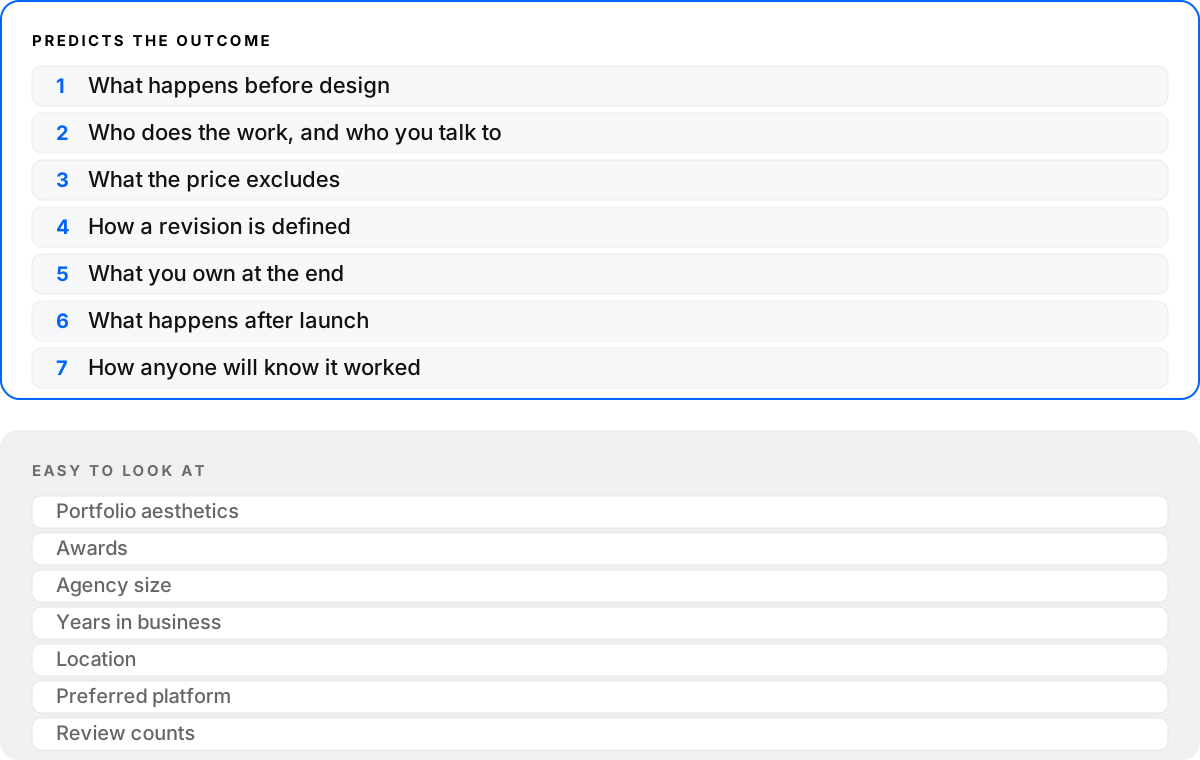
| Signal | What it predicts | The question that tests it |
|---|---|---|
| 1. What happens before design | Whether the company understands your business before deciding how the website should look. | “What will exist at the end of week one?” |
| 2. Who does the work, and who you talk to | Whether the people building your website understand your goals firsthand. | Who writes the copy, who builds the website, and will I speak to them directly? |
| 3. What the price excludes | Almost every disagreement that happens later | What isn't included in the quoted price? |
| 4. How a revision is defined | Whether feedback is included or billed as additional work. | How many revision rounds are included, and what counts as a revision? |
| 5. What you own at the end | Whether you can manage or move your website without depending on the agency. | Who owns the code, design files, domain, hosting and analytics? |
| 6. What happens after launch | Whether you'll have support when something goes wrong. | What support is available after launch, and what does it cost? |
| 7. How anyone will know it worked | Whether success is defined and measured. | What will we measure, and how will we evaluate results after launch? |
What will exist at the end of week one?
The first week tells you a lot about how a company approaches your project. Ask what they'll deliver and which decisions will be made before design begins. A good answer should explain how they'll understand your business, define your audience and offer, and plan the content and purpose of each page.
Design should follow those decisions. Otherwise, you risk approving layouts before agreeing on what the website needs to communicate or achieve.
Who writes it, who builds it, and who will you be talking to?
Ask who will actually work on your project and whether you'll communicate with them directly. The concern isn't company size, but how information moves between the people involved.
A freelancer may handle everything personally, while a studio assigns specialists to different stages. Both approaches can work. What matters is clear responsibility, consistent communication and knowing who will be accountable for the final result.
What to stop looking at
These signals are worth considering, but they tell you less about how your project will turn out than the seven above.
| Signal | Why it tells you less than it looks like |
|---|---|
| Portfolio aesthetics | Shows a company's best work, but rarely reveals the strategy behind it or the results it delivered. |
| Awards | Recognise design quality, but don't necessarily reflect business results. |
| Agency size | A larger team doesn't guarantee better work. Who is assigned to your project matters more. |
| Years in business | Experience matters, but years alone don't prove expertise in projects like yours. |
| Location | Proximity can make communication easier, but availability and collaboration matter more. |
| Preferred platform | Expertise in a tool is useful, but the platform should fit your business needs, not the agency's preferences. |
| Review counts | High ratings are encouraging, but individual reviews rarely tell you enough about the project, team or outcome. |
A portfolio is still worth examining. Look for projects similar to yours in complexity, whether that's a product catalogue, booking system or multilingual website. More importantly, read the case studies. A company that explains the problem, its approach and the results gives you more to evaluate than one that only shows finished designs.
Do you even need an agency?
Before comparing web design companies, decide what level of support your project actually needs.
| Option | Best when | Where it stops |
|---|---|---|
| A website builder or an AI tool | Your offer and audience are already clear, the website's job is to present them, and you want to edit it yourself. | Strategy, custom functionality and complex integrations may require additional expertise. |
| Freelancer | You have a clearly defined project and want direct contact with the person doing the work. | Limited capacity, specialist expertise and availability can become constraints on larger projects. |
| Small studio | Your project needs research, copywriting, design and development handled by one coordinated team. | Enterprise-scale projects or highly specialised engineering may require additional resources. |
| Full-service agency | You have multiple stakeholders, markets or ongoing marketing activities to coordinate. | Cost, and distance. You will usually speak to an account manager rather than to the people making it. |
A website builder may be all you need if your offer, audience and content are already clear. There's little reason to pay for a full-service project when a straightforward website will do the job.
Professional support becomes more valuable when you need help defining your offer, writing copy that persuades customers or building functionality that goes beyond a standard template. Choose based on what the project requires, not the size of the provider.
Why one quote is $4,000 and another is $20,000
Because they may cover very different work. Two proposals can describe the same website but include different levels of research, customisation, functionality and support. Here's what to compare before choosing.
| What affects the price | What may differ |
|---|---|
| Research and positioning | The agency researches your market, audience and competitors, or works from a strategy you provide. |
| Copywriting | Professional copywriting is included, or you're responsible for supplying the content. |
| Page design | Each page gets a custom design, or multiple pages share a standard template. |
| Mobile design | Mobile layouts are designed individually or adapted from desktop versions. |
| Forms, booking and payments | A simple contact form or a more complex booking or payment process. |
| Tracking and analytics | Analytics and conversion tracking are included at launch or require separate setup. |
| Revisions | The number of rounds, approval stages and what counts as additional work. |
| Content migration | Existing pages, images and content are transferred by the agency or left to you. |
| Hosting, domain and technical setup | Domain configuration, hosting and deployment are included or charged separately. |
| Post-launch support | Ongoing maintenance, limited support or a separate support agreement. |
| Source files and code | Whether you receive the source files and can move your website to another provider. |
Compare proposals line by line, not just by their final price. Then ask each company to specify what's excluded. A clear scope should tell you exactly what you're paying for and when additional charges might apply.
What counts as a revision?
Get the definition in writing before work begins. Disagreements often arise when clients expect changes to be included, while agencies consider them additional work. Clear revision terms prevent confusion and unexpected costs.
A revision typically adjusts work within the agreed scope, such as copy, colours, spacing or layout details. Changes to the original strategy, page structure or functionality may require additional work and fees. Ask how many revision rounds are included, when they take place and what happens after approval. Be cautious of “unlimited revisions” unless the terms clearly explain what that includes.
What do you own when it is finished?
Before signing, confirm what you'll own and control. Having a website doesn't necessarily mean you can move it to another provider.
- The source code.
- The design files.
- The domain, registered in your name.
- The hosting account.
- The analytics property.
- The CMS and any third-party logins the website depends on.
The real test is whether you can switch providers without losing access to your website or its data. If your domain, hosting or analytics are managed through the agency's accounts, make sure ownership and transfer terms are agreed in writing.
Red flags
In the order they usually appear.
- A project quote arrives before anyone understands your business or requirements.
- A proposal doesn't clearly state what's excluded.
- A portfolio shows attractive designs but offers no explanation of the decisions or results.
- “Unlimited revisions” without clear terms or boundaries.
- You don't know who will actually work on your project.
- No clear answer on who owns the domain, the hosting account and the analytics.
- No defined plan for support after launch.
The signals that predict whether a website works are not the ones that are easiest to look at.
The checklist
Use these 12 questions when evaluating a web design company. The first seven help you compare providers; the remaining five clarify expectations before you commit.
- What will you deliver before design begins?
- Who handles the copywriting, design and development, and will I work with them directly?
- What is not included in the quoted price?
- How many revision rounds are included, at which stages, and what counts as additional work?
- Who owns the code, design files, domain, hosting and analytics after launch?
- What post-launch support is available, and what does it cost?
- How will we measure whether the website achieves its goals?
- What is the project timeline, and what could delay it?
- What materials, information and access will you need from me?
- What approvals are required, and how do delays affect the schedule?
- What happens if the project needs to be paused?
- What does the first month after launch look like?
Where Senno sits in all this
Senno is one of the web design companies this guide is about, so here's how we measure up against the same criteria.
For strategy-led projects, we start with market research, positioning and a clear plan for each page before moving into design. Our team handles copywriting, design, development and tracking, with responsibilities clear from the start. Scope, exclusions, fixed pricing and revision rounds are agreed in writing. You own the source files and project accounts, with no hosting lock-in. A standard project takes up to about a month, with analytics and conversion tracking configured before launch.
Our projects show how that approach works in practice. For JAS Projects, we replaced an outdated property developer website with a complete brand identity, dedicated development pages, brochures and an enquiry system. For AJ Trading Switzerland, we built a focused landing page explaining the savings and process of importing luxury cars, with market-specific content and lead capture.
If you're considering a new website, start with our free Website Audit. We'll identify five priority improvements, rewrite your homepage headline and explain our recommendations in a recorded walkthrough. No commitment required.
Questions buyers ask
How do I choose a web design company?
Focus on what happens before design, who will work on your project, what's included in the price, how revisions are handled, what you'll own and what support comes after launch. Review portfolios and awards too, but prioritise evidence of a clear process and relevant experience.
What should I ask a web design company before hiring them?
Ask what they'll deliver before design begins, who handles the copywriting and development, and whether you'll communicate with them directly. Confirm what's excluded from the price, how revisions work, what you'll own after launch and how success will be measured.
Why do web design quotes differ so much?
Because they often cover different levels of work. Research, copywriting, custom design, functionality, integrations, tracking and post-launch support can all affect the price. Compare what's included in each proposal and ask for a clear list of exclusions before making a decision.
Is it better to hire a freelancer or an agency?
It depends on your project's scope. A freelancer can be a good choice for clearly defined work, often with lower costs and direct communication. A studio or agency may be better suited to projects requiring several disciplines, ongoing coordination or greater capacity.
Can I just use an AI website builder instead?
Yes, especially if your offer, audience and content are already clear. AI website builders can handle many straightforward websites and integrations. Professional support becomes more valuable when you need help with positioning, persuasive copywriting, custom functionality or a more complex website structure.
How long should a website take?
Timelines depend on the project's size, complexity and requirements. At Senno, a standard website typically takes up to about a month from the first call to launch. Delays can come from additional functionality, missing content or slow approvals. Ask for a timeline with clear milestones before committing.
Who owns the website when it is finished?
Ownership depends on your agreement. At Senno, you receive the editable source files and ownership of your project accounts, including hosting and analytics. Before hiring any company, confirm who controls the domain, design files, code and essential services, and whether you can transfer everything to another provider.
What are the red flags that a web design company will not deliver?
Watch for quotes issued without understanding your business, unclear scope exclusions, undefined revision policies and portfolios with no explanation of the work behind them. Other warning signs include not knowing who will handle your project, unclear ownership terms and no defined post-launch support.